Printing digital wall art at home gives you the freedom to choose the size, finish, texture, and overall appearance of your artwork. However, even a beautifully designed high-resolution file can look disappointing when printed on the wrong paper.
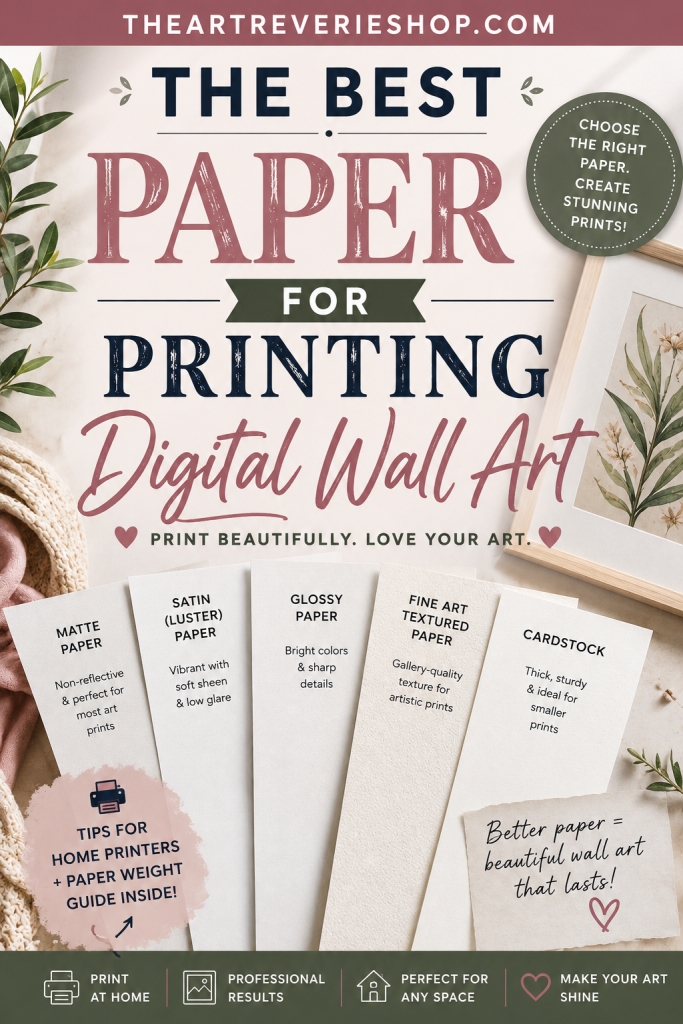
The best paper for printing digital wall art depends on the style of the artwork, the type of printer you own, the frame you plan to use, and the finish you want to achieve. Matte paper works beautifully for many printable designs, while glossy or satin paper may be better for photography. Textured fine art paper can give illustrations and vintage prints a more luxurious, gallery-inspired appearance.
Understanding these differences will help you avoid faded colors, distracting reflections, curled paper, and prints that look less polished than expected.
Why Paper Choice Matters for Digital Wall Art
Paper affects nearly every part of the finished print, including color, contrast, sharpness, texture, and durability. Standard copy paper is designed for everyday documents, not artwork. Its thin surface absorbs ink quickly and can cause colors to appear dull or uneven.
Quality photo or presentation paper holds ink more effectively. As a result, details look sharper, dark areas appear richer, and colors remain closer to what you see on your screen.
Thickness also influences the presentation. Heavier paper feels more substantial, stays flatter inside a frame, and is less likely to ripple when exposed to ink.
Before selecting a paper, consider whether your artwork contains photographs, typography, watercolor effects, detailed illustrations, or bold blocks of color. Each design style benefits from a slightly different finish.
Matte Paper: The Best Overall Choice for Printable Wall Art
For most digital wall art, premium matte paper is a great place to start. Its smooth, non-reflective surface gives artwork a clean and professional appearance without producing glare.
Matte paper is especially suitable for:
- Vintage-inspired wall art
- Typography prints
- Botanical illustrations
- Minimalist artwork
- Nursery prints
- Retro posters
- Watercolor-style designs
- Gallery wall collections
Since the surface does not reflect much light, matte prints remain easy to view in bright rooms or near windows. This advantage makes them ideal for living rooms, bedrooms, hallways, offices, and other spaces with plenty of natural light.
Look for heavyweight matte paper between approximately 170 and 230 gsm for home printing. Paper within this range usually feels sturdy without becoming too difficult for a standard inkjet printer to feed.
Always check your printer’s maximum supported paper weight before purchasing a large package.
Glossy Paper: Best for Bright Photographic Prints
Glossy photo paper creates strong contrast, vivid colors, and a polished surface. Photographs printed on glossy paper often appear sharper and more saturated than those printed on uncoated paper.
This finish may work well for:
- Travel photography
- Colorful city scenes
- Coastal photographs
- Fashion photography
- High-contrast digital art
- Modern photographic posters
Although glossy paper can create impressive color, it also reflects light. Glare may make the artwork difficult to see from certain angles, especially when displayed opposite a window or bright lamp.
Fingerprints are another consideration. Glossy surfaces show smudges easily, so handle the print by its edges and allow the ink to dry completely before framing.
When placing a glossy print behind glass, reflections from both the paper and the glazing can become distracting. Satin or luster paper may offer a more balanced alternative.
Satin or Luster Paper: A Versatile Middle Ground
Satin and luster papers sit between matte and glossy finishes. They offer stronger color and contrast than traditional matte paper while producing less glare than high-gloss photo paper.
Their lightly reflective surface works particularly well for photography, digital paintings, landscapes, and detailed illustrations. Many professional photo labs use luster finishes because they provide rich color without the mirror-like shine of glossy paper.
Choose satin or luster paper when you want:
- Vibrant colors with controlled reflections
- A professional photo-print appearance
- Better resistance to visible fingerprints
- A finish suitable for both photographs and illustrations
This option is particularly helpful when you cannot decide between matte and glossy paper.
Textured Fine Art Paper: Best for a Gallery-Inspired Finish
Textured fine art paper can make a home print feel more distinctive and expensive. Its surface may resemble watercolor paper, cold-press paper, canvas, or traditional artist stock.
The texture adds depth to botanical prints, sketches, paintings, vintage illustrations, and soft abstract designs. Rather than looking like a standard computer printout, the finished piece can resemble an original work on artist paper.
Fine art paper works best for:
- Watercolor-style artwork
- Vintage botanical illustrations
- Pencil or charcoal designs
- Digital paintings
- Cottagecore wall art
- Museum-inspired prints
Keep in mind that heavily textured paper may soften very small details or fine typography. A smoother matte paper is usually better for designs containing tiny lettering or precise geometric lines.
Before printing your final artwork, run a small test to confirm that the texture complements the design.
Cardstock: Is It Suitable for Digital Wall Art?
Cardstock can be used for printable wall art, but not every printer handles it well. Its weight helps prints remain flat and gives them a sturdy feel, making it a practical choice for smaller artwork and unframed displays.
Smooth white cardstock generally produces better wall art than heavily fibrous craft cardstock. Look for paper specifically labeled for inkjet printing because untreated cardstock may absorb too much ink.
Cardstock is useful for:
- Small framed prints
- Quote art
- Children’s room artwork
- Seasonal decorations
- Desk displays
- Simple black-and-white designs
Heavy cardstock may jam or feed incorrectly through printers with curved paper paths. Use the rear paper tray or manual feed slot when available, and confirm the supported thickness in your printer manual.
Bright White or Warm White Paper?
Paper color can subtly change the mood of your artwork.
Bright white paper creates crisp contrast and helps cool colors, black typography, and modern designs appear clean and sharp. It is often a good match for minimalist art, graphic posters, and colorful photography.
Warm white or natural white paper has a softer cream undertone. Vintage illustrations, neutral artwork, sepia photography, and earthy designs often look more authentic on this surface.
Compare the paper with the background color of your digital file before printing. Artwork created on a pure white digital background may show a slight border when printed on cream-colored stock.
What Paper Weight Should You Choose?
Paper weight is commonly measured in gsm, which means grams per square meter. A higher gsm generally indicates a thicker and heavier sheet, although texture and coating also affect how the paper feels.
For home wall art printing, consider these general ranges:
- 120 to 170 gsm: Suitable for test prints and lightweight artwork
- 170 to 230 gsm: A strong choice for most framed digital wall art
- 230 to 300 gsm: Premium, sturdy paper for printers that support heavier stock
- 300 gsm and above: Better suited to specialty printers and professional print services
A premium matte paper around 200 gsm offers a reliable combination of quality, flexibility, and printer compatibility for many home users.
This post contains affiliate links, which may support the site at no extra cost to you.
Match the Paper to Your Printer
Inkjet and laser printers use different printing methods, so paper must be compatible with your specific machine.
Inkjet printers spray liquid ink onto the page. Paper designed for inkjet printing includes a coating that controls absorption and helps preserve detail.
Laser printers use toner and heat. Inkjet photo paper should never be placed in a laser printer unless the packaging clearly states that it is laser compatible. The coating may not tolerate the heat used during the printing process.
Read the paper packaging carefully before purchasing. Labels such as “inkjet,” “laser,” or “universal” indicate which printer technology the paper supports.
For a complete walkthrough of printer settings, file preparation, sizing, and test printing, please read How to Print Digital Wall Art at Home.
Practical Tips for Better Home Prints
Begin with a test print on regular paper to check the crop, orientation, margins, and overall size. Once everything looks correct, load your premium paper.
Select the matching paper type in your printer settings. Choosing “Premium Matte,” “Photo Paper,” or another accurate option helps the printer control how much ink is applied.
Use the highest suitable print-quality setting for the final version. Draft mode saves ink but rarely provides the detail or color depth needed for display-worthy artwork.
Print at the file’s intended aspect ratio to prevent accidental cropping or distortion. Avoid enlarging a small file beyond its recommended dimensions because paper quality cannot correct insufficient image resolution.
Let the finished print dry on a clean, flat surface before touching the printed area. Depending on the ink and coating, full drying may take longer than the paper feels.
Store unused sheets in their original packaging to protect them from moisture, dust, and curling.
When to Use a Professional Printing Service
Home printing is convenient for small and medium-sized artwork, but larger prints may require professional equipment. A local print shop or online printing company can provide archival paper, pigment inks, borderless printing, and sizes beyond the limits of a home printer.
Professional printing may be the better choice when you want:
- Oversized wall art
- Archival fine art paper
- Gallery-quality photography
- Exact color management
- Borderless prints larger than your printer supports
For help comparing your options, please check out Where to Print Digital Wall Art: Home, Local or Online. That guide explains when home printing is practical and when a local or online service may provide better value.
What Is the Best Paper for Printing Digital Wall Art?
Premium heavyweight matte paper is the best overall option for most printable wall art. It reduces glare, produces clear details, works with many design styles, and looks attractive behind a frame.
Photographic artwork may benefit from satin, luster, or glossy photo paper. Meanwhile, textured fine art paper is a beautiful choice for watercolor designs, botanical illustrations, and vintage-inspired artwork.
Ultimately, the right paper should complement the design rather than compete with it. Test a few finishes, confirm that each option is compatible with your printer, and choose the surface that gives your artwork the desired mood.
Beautiful digital wall art begins with a quality file, but the paper is what brings that file into the physical world. With the right combination of weight, finish, printer settings, and careful handling, you can create polished wall art at home that looks ready to frame and display.
Discover more from The Art Reverie Shop
Subscribe to get the latest posts sent to your email.