Downloading a beautiful piece of digital wall art is exciting, but choosing where to print it can feel less straightforward. Should you use your home printer, visit a local print shop, or upload the file to an online printing service?
Each option can produce attractive results when the artwork is prepared correctly. However, the best choice depends on your preferred size, budget, deadline, paper selection, and expectations for color quality.
Understanding the advantages and limitations of each printing method will help you avoid unnecessary expense, disappointing colors, blurry details, and incorrect cropping. This guide explains where to print digital wall art and how to select the right option for your space.
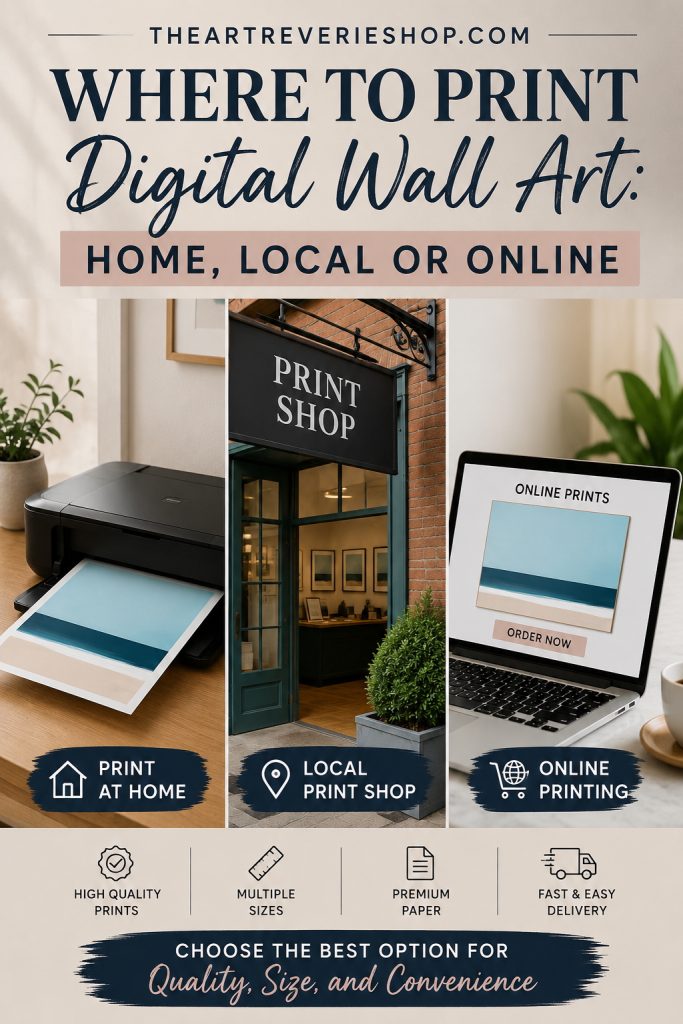
What to Check Before Printing Digital Wall Art
Before choosing a printer, open the folder containing your digital download and review the included files. Many printable art sellers provide several versions of the same design so buyers can print different sizes without stretching or distorting the artwork.
Look for information about:
- File format, such as JPEG or PNG
- Pixel dimensions
- Recommended print sizes
- Aspect ratio
- Resolution
- Color profile
- Printing instructions
High-resolution JPEG files are commonly used for digital wall art because they offer excellent image quality while remaining easy to upload and print.
Choose the file that matches your desired frame or paper size. For example, a 2:3 ratio file works naturally with sizes such as 8 × 12, 12 × 18, 16 × 24, and 20 × 30 inches. Printing that file at 8 × 10 inches would require cropping because the proportions are different.
Matching the file ratio to the print size is one of the most important steps in the entire process.
Printing Digital Wall Art at Home
Home printing is often the fastest and most convenient option for small artwork. It gives you control over the paper, printer settings, and number of copies without requiring a trip to a store.
Most standard home printers can handle common sizes such as 5 × 7, 8 × 10, or 8.5 × 11 inches. Some wide-format models can produce prints measuring 11 × 17, 12 × 18, or 13 × 19 inches.
Home printing works especially well for:
- Small frames
- Desk art
- Seasonal decorations
- Nursery prints
- Greeting-card-sized artwork
- Temporary displays
- Test prints
The final quality depends heavily on the printer, ink, and paper. Everyday office paper usually makes colors appear dull and reduces contrast. Matte photo paper, premium presentation paper, or fine art inkjet paper will create a more polished result.
Select the highest-quality print setting available instead of draft or standard mode. Make sure the selected paper type in the printer menu matches the paper being used. This setting controls how much ink the printer applies.
Home printing may not be the least expensive option when several large prints are needed. Replacement ink can become costly, and standard printers may leave borders that require trimming. Color differences may also occur if the monitor is very bright or the printer has not been maintained.
For a single small print or a quick decorating project, however, printing at home can be wonderfully practical.
This post contains affiliate links, which may support the site at no extra cost to you.
Using a Local Print Shop
A local printing service offers a helpful middle ground between home printing and ordering online. Customers can often speak directly with an employee, explain the project, inspect paper samples, and request assistance with sizing.
Possible local options include:
- Independent print shops
- Office supply stores
- Copy and business centers
- Photography labs
- Art reproduction studios
- Some pharmacies and large retailers
Local printing is a strong choice when you need the artwork quickly but want a larger size or better finish than your home printer can provide.
Before placing the order, ask whether the shop prints photographs, posters, or fine art reproductions. These products are not always produced on the same equipment. A basic document copier may be suitable for an inexpensive poster, while a photographic printer or professional inkjet printer will generally provide smoother tones and stronger detail.
Request a small proof when color accuracy matters. Viewing a test print can reveal whether the artwork is too dark, overly warm, or more saturated than expected.
Bring or upload the original high-resolution file rather than a screenshot. Screenshots, social media images, and files saved from previews may not contain enough information for a clean print.
Local services can be especially useful when you need:
- Same-day or next-day printing
- Help selecting the correct file
- Custom trimming
- Poster-size artwork
- Heavy paper
- Several copies
- Advice from a print specialist
Prices may be higher than certain online services, particularly for oversized artwork. Nevertheless, personal assistance and faster pickup can make the additional cost worthwhile.
Ordering Digital Wall Art From an Online Printer
Online printing services are often the most versatile option for large artwork, premium paper, specialty finishes, and multiple prints. The process usually involves uploading the artwork, selecting a size, choosing a material, reviewing the crop, and placing the order for delivery.
Online printing works well for:
- Large statement pieces
- Gallery walls
- Professional displays
- Fine art paper
- Canvas prints
- Framed prints
- Metal or acrylic displays
- Gifts sent directly to someone else
One major advantage is access to sizes that may not be available locally. Many services also offer several paper surfaces, including matte, glossy, luster, textured, and archival fine art papers.
Pay close attention to the automated crop preview. Some websites enlarge an image to fill the selected dimensions, which can remove part of the design. Look at every edge of the preview before approving the order.
Turn off automatic image enhancement when possible. Features that promise to improve brightness, contrast, sharpness, or color may alter artwork that has already been professionally edited.
Delivery time and shipping costs should also be considered. Online services may offer attractive print prices, but a rush order or oversized package can increase the total considerably.
Ordering online is usually best when quality, material selection, and larger dimensions are more important than immediate pickup.
Home vs. Local vs. Online Printing
The right choice becomes easier when you compare the three methods according to your priorities.
Choose home printing when:
You need a small print immediately, already own a capable printer, and want complete control over the paper and settings.
Choose a local printer when:
You want personal assistance, need a larger print quickly, or would like to inspect paper samples before ordering.
Choose an online service when:
You need oversized artwork, premium materials, specialty products, or several coordinated prints delivered to your door.
No single method is automatically best for every project. A person decorating a small office may be perfectly satisfied with an 8 × 10 print produced at home. Someone creating a large living-room focal point may prefer an online fine art lab. Another buyer preparing a last-minute gift may benefit most from local pickup.
Which Paper Is Best for Digital Wall Art?
Matte paper is one of the safest choices for printable wall art. Its nonreflective surface makes artwork easier to view from different angles and works beautifully behind glass.
Luster paper has a subtle sheen and can make colors appear richer without creating the strong reflections associated with glossy paper. It is especially attractive for photographic artwork.
Textured fine art paper adds depth and a traditional, gallery-inspired appearance. Watercolor-style illustrations, botanical designs, vintage posters, and painterly artwork often look impressive on this surface.
Glossy paper produces vivid colors and deep contrast, but reflections may become distracting once the print is framed. For most home décor projects, matte, luster, or fine art paper will be more versatile.
Whenever possible, order paper samples or begin with a smaller test print before investing in a large format.
Practical Tips for Better Digital Art Prints
Use the original downloaded file rather than copying the image from a website listing. Confirm that the file matches the proportions of your intended frame, and never enlarge a low-resolution preview.
Keep important text and design elements away from the trimming edge. Even professional equipment may remove a small amount during printing or finishing.
Avoid judging print brightness solely by a backlit screen. Computer monitors and phones often make artwork appear brighter than it will look on paper. Lowering the screen brightness before ordering can provide a more realistic impression.
Check the finished print under natural daylight as well as the lighting used in the room. Warm household bulbs, cool LEDs, and direct sunlight can make the same colors appear noticeably different.
Finally, store unused prints flat in a clean, dry location. Acid-free sleeves or folders can protect the paper from dust, moisture, bending, and fading.
Deciding where to print digital wall art comes down to size, quality, convenience, and budget. Home printing is excellent for smaller projects and immediate results. Local print shops provide guidance, speed, and convenient pickup. Online printers offer the widest selection of sizes, papers, and specialty finishes.
Whichever method you choose, begin with the correct high-resolution file and match its aspect ratio to your desired print size. Review the crop carefully, choose paper that complements the artwork, and consider ordering a test before committing to a large print.
With thoughtful preparation, printable wall art can look polished, professional, and beautifully suited to your home.
Discover more from The Art Reverie Shop
Subscribe to get the latest posts sent to your email.