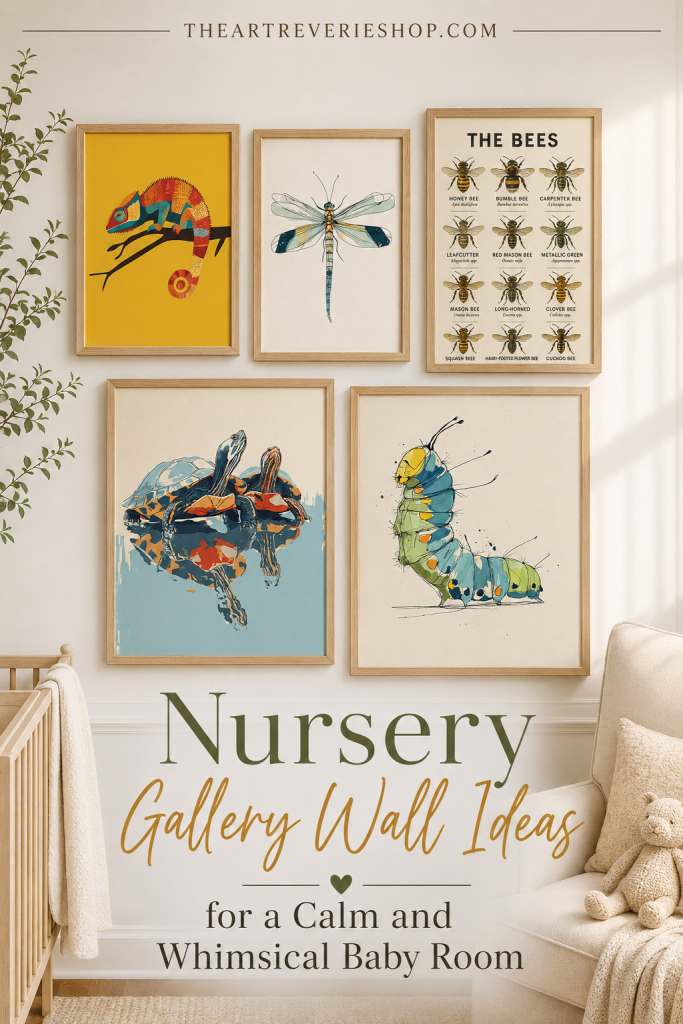
A nursery gallery wall can introduce imagination, warmth, and personality without making the room feel overly busy. Rather than treating the wall as an empty area that must be filled, think of it as a quiet visual story your baby will gradually begin to notice.
The most successful nursery gallery wall ideas combine playful subjects with gentle colors, comfortable spacing, and artwork that can remain relevant beyond the newborn stage. Animals, botanical illustrations, alphabet prints, storybook scenes, celestial designs, and family keepsakes can all work together when the arrangement has a clear visual rhythm.
Instead of matching every frame and print perfectly, focus on creating a collection that feels peaceful, personal, and slightly magical.
Begin With the Feeling You Want to Create
Choosing artwork becomes easier when you first decide how the nursery should feel.
Some parents prefer a dreamy room filled with moons, clouds, stars, and soft nighttime colors. Others may envision a cheerful woodland setting, a quiet countryside scene, a vintage storybook theme, or a nursery inspired by flowers and garden creatures.
Select three descriptive words before buying or printing anything. Your words might be:
- Calm, natural, and curious
- Airy, playful, and modern
- Cozy, nostalgic, and whimsical
- Gentle, colorful, and imaginative
Use those words as a filter while comparing artwork. A print may be charming on its own, but it does not necessarily belong in the collection if it introduces a completely different mood.
This approach prevents the gallery wall from becoming a random assortment of cute pictures.
Build a Quiet Story Across the Wall
Whimsical nursery decor does not need to be loud or excessively themed. A more timeless arrangement suggests a story without explaining every detail.
For example, a countryside-inspired gallery wall could include a sheep illustration, a small botanical print, a rolling landscape, and a simple sun or cloud design. Together, the pieces create a peaceful world that feels connected.
An ocean-themed collection might combine a vintage whale, delicate waves, a sailboat, and a small typographic print. Woodland artwork could feature a rabbit, mushrooms, leaves, and a moonlit forest.
Repeating a visual idea across several pieces creates continuity. The connection might come from a shared color, illustration style, subject, background tone, or sense of movement.
Parents decorating with gentle animal imagery may also enjoy the Whimsical Sheep Nursery Wall Art for inspiration.
Choose One Anchor Piece
Every nursery gallery wall benefits from an anchor piece. This is usually the largest, darkest, or most detailed artwork in the arrangement.
The anchor gives the eye somewhere to begin. Smaller pieces can then extend outward from it without making the display feel scattered.
Place the anchor close to the center, although it does not have to sit in the exact middle. Slightly off-center positioning often feels more relaxed and collected.
Before selecting dimensions, please check out the Printable Wall Art Size Guide for Choosing the Perfect Print. Understanding print ratios early can prevent awkward cropping and unnecessary frame purchases.
Use Soft Color Repetition
Color can make several unrelated prints feel like one intentional nursery gallery wall.
Choose two or three recurring shades from the room and look for artwork containing variations of those colors. Dusty blue, muted green, pale peach, warm cream, faded yellow, lavender, and soft terracotta can bring interest without overwhelming the space.
The colors do not need to match exactly. In fact, small tonal variations often make the arrangement feel more natural.
Try repeating:
- One color in at least three prints
- A similar background shade across the collection
- A wood tone that appears elsewhere in the nursery
- A subtle accent color from the rug, curtains, or bedding
Avoid introducing every nursery color into a single display. Limiting the palette allows playful subjects to remain visually calm.
Mix Sizes Without Creating Visual Noise
Variation gives a gallery wall personality, but too many competing dimensions can make a nursery feel unsettled.
Begin with one larger print, add two or three medium pieces, then use one or two smaller designs as visual pauses. A collection of five or seven pieces is often easier to balance than an even-numbered group.
Spacing matters just as much as frame size. Leave approximately two to three inches between frames so each design has breathing room while still belonging to the overall composition.
Arrange the framed pieces on the floor before hanging them. Another practical option is to trace each frame onto paper, cut out the shapes, and attach the templates to the wall with painter’s tape.
This preview allows you to adjust spacing, height, and balance without making unnecessary holes.
Keep the Display Safely Beyond Reach
Nursery wall decor should be planned with safety as carefully as style.
Avoid placing heavy frames directly over a crib, changing table, rocking chair, or another area where the baby regularly rests. Lightweight artwork, secure mounting hardware, and shatter-resistant glazing are sensible choices for a child’s room.
Frames should be firmly attached according to their weight and the wall type. For lighter pieces, removable picture-hanging strips may provide a convenient option, but always read the manufacturer’s weight limits and installation instructions before use.
As the child becomes mobile, regularly check the display for loose frames, exposed hooks, or reachable objects.
A beautiful arrangement should never compromise the room’s safety.
This post contains affiliate links, which may support the site at no extra cost to you.
Select Frames That Feel Light and Cohesive
White, natural wood, pale oak, and softly painted frames work especially well in calm nursery interiors. Their lighter visual weight allows the illustrations to remain the focus.
Matching every frame is not required. Cohesion can come from repeating one characteristic, such as the wood tone, mat color, molding width, or finish.
For a soft collected look, try combining:
- Natural wood with white
- Cream with pale oak
- White with muted pastel frames
- Light wood with one vintage-inspired accent frame
Dark frames can provide definition, although too many may feel heavy in a small nursery. Use black, walnut, or deep-colored frames selectively when the artwork needs contrast.
Please read How to Choose the Right Frame Color for Your Artwork before purchasing an entire frame set.
Add Personal Elements Without Overcrowding
Not every piece on the wall needs to be traditional artwork. Meaningful objects can give the nursery gallery wall a sense of history and affection.
Limit personal additions to one or two items so they remain special. Leaving blank space around a keepsake can make it feel more important than surrounding it with excessive decoration.
A deep shadow box may be suitable for dimensional objects, provided it is mounted securely and positioned safely away from the crib.
Print Nursery Artwork With a Soft Finish
Nursery illustrations generally look beautiful on premium matte paper because the surface reduces glare and supports a gentle, art-like appearance. Textured fine art paper can complement watercolor animals, botanical designs, and vintage storybook imagery.
Glossy paper may create stronger reflections, especially in a room with bright windows or overhead lighting.
Before choosing a finish, please check out The Best Paper for Printing Digital Wall Art at Home. A small test print can help you evaluate color, detail, and paper texture before printing the full collection.
Once the prints are ready, How to Frame Printable Wall Art at Home for a Professional Look explains how to handle sizing, mats, mounting, and frame assembly.
Design a Gallery Wall That Can Grow With the Child
Nurseries change quickly. Artwork that feels appropriate for an infant may eventually need to suit a toddler’s room, reading corner, or play space.
Choose several pieces with lasting appeal instead of building the entire wall around newborn imagery. Animals, nature, travel, letters, numbers, and imaginative landscapes can remain relevant for many years.
Leave one position easy to update. That frame could later hold a child’s drawing, a new photograph, a favorite character, or artwork connected to an emerging interest.
This flexible approach allows the gallery wall to evolve without requiring a complete redesign.
Create Calm Through Editing
The final step is knowing when to stop.
After arranging the artwork, step across the room and study the wall as one composition. Remove any piece that feels too bright, too detailed, too dark, or disconnected from the story.
Empty wall space is not a decorating failure. It gives the artwork room to breathe and helps the nursery retain a peaceful atmosphere.
Thoughtful nursery gallery wall ideas are less about filling every available area and more about creating a gentle visual experience. Begin with a feeling, select one anchor piece, repeat a restrained palette, vary the scale carefully, and include only the artwork that contributes to the room’s story.
With printable designs, meaningful keepsakes, and a flexible layout, you can create a calm and whimsical baby room that continues to feel special as your child grows.
For more ways to elevate digital artwork through paper, framing, scale, and presentation, please read How to Make Printable Wall Art Look Expensive.
Browse more printable vintage wall art and discover unique retro-inspired designs at THEARTREVERIESHOP.COM, where you’ll find downloadable artwork and timeless style for your home.
Discover more from The Art Reverie Shop
Subscribe to get the latest posts sent to your email.