Dorm rooms are rarely generous with space. Between a Twin XL bed, study desk, storage containers, books, clothing, and everyday necessities, even a well-organized room can begin to feel visually crowded.
Minimalist dorm room wall art offers a different approach to decorating. Rather than covering every blank surface, it uses a small number of carefully chosen prints to create personality without overwhelming the room.
The goal is not to make a dorm feel empty or impersonal. Instead, minimalist decorating gives each piece of art enough breathing room to be noticed. Clean compositions, intentional color choices, and uncomplicated arrangements can turn a basic college room into a calm place to study, rest, and recharge.
Begin With the Feeling You Want
Before selecting artwork, decide how you want the room to feel.
A dorm designed for calm might include soft landscapes, simple botanical illustrations, or abstract shapes in muted colors. Someone who wants a more energetic space could choose graphic typography, bold photography, or one retro-inspired statement print.
Limiting the room to two or three descriptive words makes the selection process easier. Consider phrases such as:
- Calm, natural, and warm
- Modern, graphic, and confident
- Creative, nostalgic, and playful
- Neutral, polished, and uncluttered
Use those words as a filter when considering every print. Artwork that does not support the chosen direction can be saved for another room or semester.
This editing process is what separates a minimalist dorm from a room that contains a few random decorations.
Choose One Visual Anchor
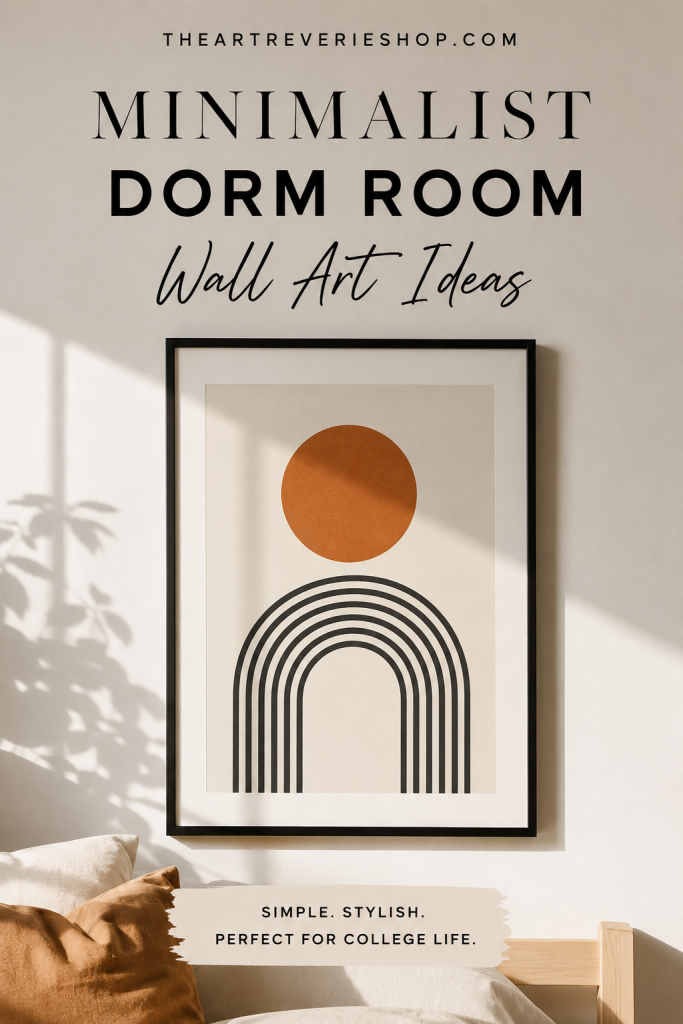
Minimalist dorm room wall art works best when the eye has a clear place to land. Instead of scattering several unrelated pieces across the room, begin with one visual anchor.
The anchor might be a large print above the bed, a framed illustration beside the desk, or a pair of coordinating prints placed over a dresser. It should be the strongest artwork in the room without competing with every other object.
For a standard dorm wall, an 18-by-24-inch print can create presence without requiring an elaborate installation. Smaller rooms may look better with an 11-by-14-inch or 12-by-16-inch piece surrounded by generous open space.
Printing a larger file does not have to be expensive. Please read How to Print Large Wall Art on a Budget for practical suggestions on choosing affordable paper, printing services, and frames.
Let Negative Space Become Part of the Design
Blank wall space is not wasted space. In minimalist interiors, it acts as a visual pause between the artwork and the room’s functional elements.
Leaving open space around a print helps the design appear more intentional. It also prevents the walls from competing with patterned bedding, desk supplies, bulletin boards, and storage pieces.
As a general styling guide, avoid positioning artwork too close to the ceiling, doorframe, or neighboring furniture. Center the arrangement over the object it relates to, such as the bed or desk, and leave enough surrounding wall visible to frame the composition naturally.
Resist the urge to fill every awkward gap. One well-positioned piece often looks more polished than several small prints added simply to fill space.
Build a Controlled Color Palette
A limited color palette makes a small dorm room feel more unified.
Start by identifying the dominant colors already present in the bedding, rug, curtains, and storage accessories. Select artwork that repeats one or two of those shades rather than introducing an entirely separate collection of colors.
Neutral combinations are particularly effective in minimalist dorm rooms. Cream, black, tan, soft gray, sage green, dusty blue, and muted terracotta can provide warmth while preserving a clean appearance.
Minimalism does not require an all-beige room. A vivid orange, cobalt blue, or rich green print can become an excellent focal point when the rest of the décor remains restrained.
The important principle is repetition. When a color from the artwork appears again in a pillow, blanket, desk organizer, or lamp, the entire room begins to feel connected.
Try a Two-Print Arrangement
Students who want more than one artwork without creating a full gallery wall can use a simple two-print arrangement.
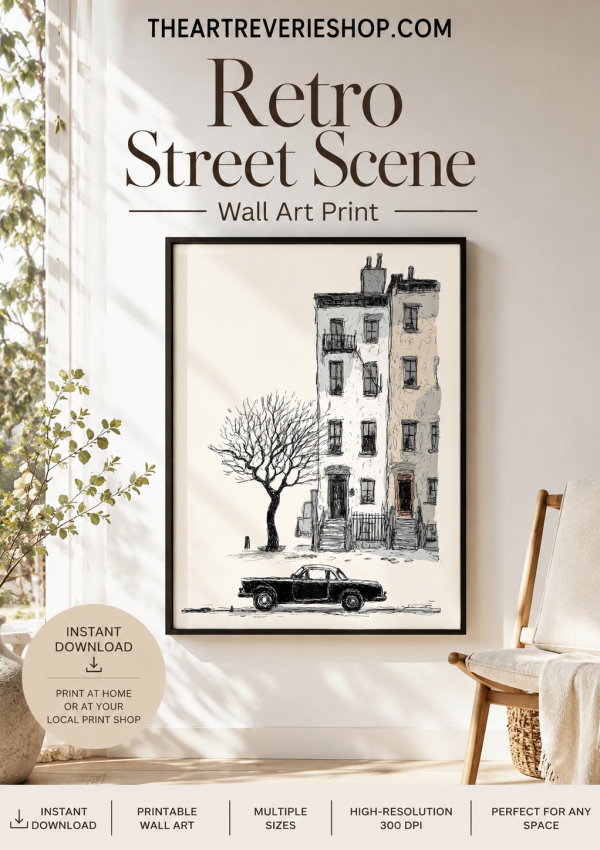
Choose pieces with a shared color, subject, line style, or artistic period. Matching does not mean the images must be identical. A retro travel print might pair beautifully with a geometric sun illustration when both use the same warm palette.
Hang the pieces at the same height with equal spacing between them. Consistent frame sizes make the arrangement feel orderly, while coordinating frames allow the artwork to remain the main attraction.
Portrait-oriented prints can visually lift a low dorm ceiling. Horizontal artwork, by comparison, can make the wall above a bed appear wider.
For help creating a coordinated combination, please check out How to Create a Matching Wall Art Set.
Turn the Desk Wall Into a Focus Zone
Not every dorm print needs to be placed above the bed. The wall near the desk provides an opportunity to support concentration while adding style.
Consider a small abstract print, architectural photograph, restrained motivational design, or peaceful landscape. Avoid filling the entire study area with tiny notes, decorative signs, and unrelated images. Too many visual details can make an already busy workspace feel chaotic.
One medium print positioned above the desk can define the zone without reducing its practicality. A narrow picture ledge may also work when dorm regulations permit it, although removable hanging methods are usually easier for temporary housing.
Students shopping for lightweight frames, removable picture-hanging strips, or simple poster hangers can compare suitable options on Amazon. Check the product dimensions and weight limits before ordering, especially when hanging art on painted concrete or cinder-block walls.
Always review the residence hall’s decorating rules before attaching anything to the wall.
Use Frames That Visually Disappear
Minimalist framing should support the artwork rather than overpower it.
Slim black frames provide crisp contrast and work especially well with photography, typography, and contemporary illustrations. Light wood introduces warmth and complements botanical, Scandinavian, and nature-inspired prints. White frames create a quiet, almost seamless appearance against pale dorm walls.
Choose one frame finish and repeat it throughout the room. Consistency makes inexpensive frames look more deliberate and helps separate the minimalist style from a collection assembled without a plan.
A mat can also make a modest print feel more substantial. Wide white borders provide breathing room around the image and create the refined appearance often seen in galleries.
Please read How to Add a Mat to Printable Wall Art before sizing the print and frame. Planning the mat dimensions first can prevent unwanted cropping or an awkward fit.
This post contains affiliate links, which may support the site at no extra cost to you.
Consider Frameless Displays
Frames are not the only way to display minimalist dorm room wall art.
Wooden poster hangers, magnetic rails, clean-edged clipboards, and removable adhesive mounts can produce a simple look while reducing weight. These options are useful for students who move frequently or want to change their artwork between semesters.
A frameless print should still look intentional. Keep the paper smooth, align the edges carefully, and avoid combining too many hanging methods on the same wall.
Higher-quality paper can make a noticeable difference when the print is displayed without glass. A heavyweight matte stock generally provides a cleaner finish than thin multipurpose printer paper.
For guidance on choosing a surface, please check out The Best Paper for Printable Wall Art.
Rotate Artwork Instead of Adding More
College life changes throughout the year, and the room can evolve with it. Rather than continually adding new decorations, rotate one or two prints each semester.
Soft botanical art may feel right at the beginning of fall, while a warmer retro print can refresh the room during winter. Changing the anchor artwork creates a different atmosphere without requiring new bedding, furniture, or storage accessories.
Printable wall art makes rotation especially practical because digital files can be stored and reprinted in another size when needed. Keep unused prints flat in a protective portfolio or rigid folder to prevent creases.
This approach preserves the calm minimalist foundation while still allowing room for experimentation.
Edit the Room Before Calling It Finished
The final stage of minimalist decorating is subtraction.
Step back and look at the wall from the doorway. Notice whether one area feels crowded, whether the artwork appears too high, or whether several pieces are competing for attention.
Remove anything that does not contribute to the intended atmosphere. Repositioning one print or clearing a cluster of small accessories may improve the room more than purchasing another decorative item.
A successful minimalist dorm room feels personal, not sparse. Every displayed piece should have a reason for being there, whether it reflects a favorite place, artistic style, memory, or future goal.
By choosing one visual anchor, controlling the color palette, preserving negative space, and using renter-friendly display methods, students can create a polished room without filling every wall. The result is a comfortable college space that feels easier to maintain, easier to move, and distinctly their own.
Discover more from The Art Reverie Shop
Subscribe to get the latest posts sent to your email.