A small home office does not need a large collection of furniture or an expansive blank wall to feel thoughtfully designed. Even a compact corner, converted closet, bedroom workspace, or narrow alcove can become a polished place to work when the artwork is chosen with scale and visual balance in mind.
Rather than filling every available surface, use wall art to influence how the office feels. Vertical prints can make a low ceiling appear taller, carefully placed horizontal artwork may visually widen a narrow wall, and designs with open backgrounds can prevent the space from feeling crowded.
These wall art ideas for a small home office focus on creating a greater sense of space while adding personality, color, and inspiration.
Begin With the Office’s Visual Problem
Before selecting artwork, identify what makes the office feel small.
A narrow workspace may need more horizontal movement. Low ceilings can benefit from vertical emphasis, while a dark corner might require artwork with a lighter palette. Offices containing several shelves, devices, notebooks, and storage containers usually need calmer artwork to balance the surrounding visual activity.
Stand at the entrance and notice what first captures your attention. Then sit at the desk and study what remains within your direct line of sight.
Once the main issue is clear, artwork can become part of the solution rather than another decorative item competing for space.
Use One Confident Focal Point
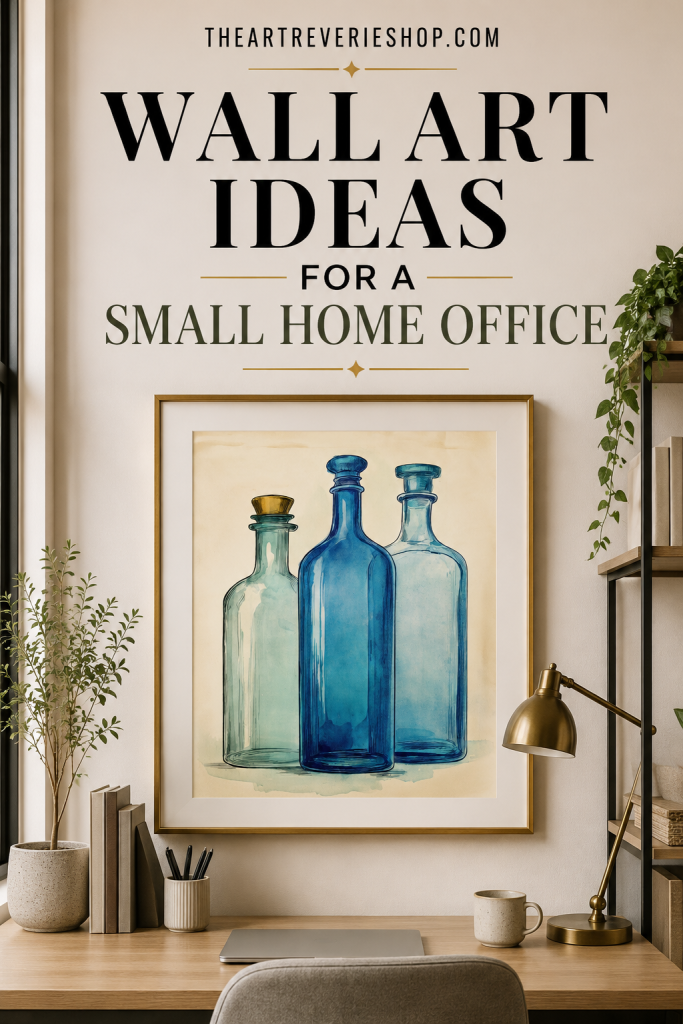
Several tiny frames scattered around a compact office can make the walls appear more fragmented. One well-proportioned focal print often creates a calmer and more substantial result.
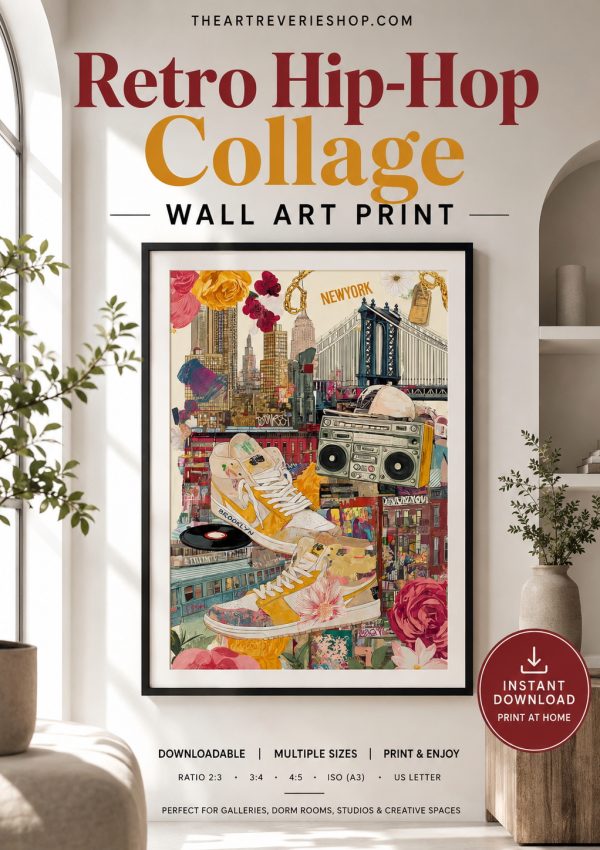
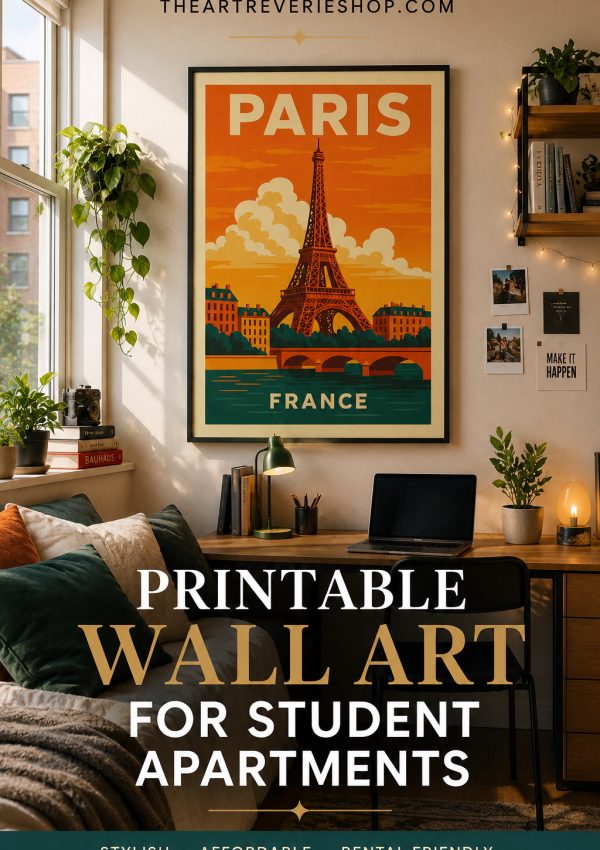
Choose a piece that can be appreciated from the doorway without overpowering the desk. Vintage travel posters, architectural illustrations, retro city scenes, botanical designs, and restrained abstract artwork can all work beautifully.
Place the focal piece above the desk, on the wall opposite the entrance, or behind a reading chair. Avoid hanging it too close to the ceiling, as the resulting separation can make the artwork appear disconnected from the furniture.
Please read the Printable Wall Art Size Guide for Choosing the Perfect Print before printing.
Make a Narrow Office Feel Wider
Horizontal artwork naturally encourages the eye to move from side to side. That movement can make a narrow office appear broader, particularly when the print is displayed above a desk, short cabinet, or floating shelf.
Panoramic landscapes, city skylines, coastal scenes, architectural views, and wide abstract compositions are especially effective. A pair of related vertical prints may also create a sense of width when positioned side by side with a narrow gap between them.
Keep the arrangement visually connected to the furniture below it. Artwork that is dramatically smaller than the desk may appear to float, while an oversized frame can make the wall feel compressed.
For most small offices, a modest horizontal piece or coordinated pair provides enough presence without consuming the entire wall.
Create Height With Vertical Artwork
Compact offices often contain narrow wall sections beside windows, doors, shelving units, or bookcases. Instead of leaving these areas unused, add a tall vertical print that draws attention upward.
Botanical studies, fashion illustrations, portrait-oriented travel posters, buildings, maps, and typography can emphasize height. Positioning two small vertical prints in a neat stack offers another way to use a narrow surface.
Leave comfortable space between the upper frame and the ceiling. Crowding artwork against the top of the wall rarely makes a room feel taller. The goal is to create a graceful upward line, not fill every inch.
Slim frames are generally more suitable than thick, highly decorative styles because they preserve more visible wall space.
Choose Artwork With Visual Breathing Room
Busy artwork is not automatically unsuitable for a small office. Problems arise when intricate prints compete with crowded shelves, patterned storage, tangled cables, and multiple computer screens.
Designs containing negative space give the eye somewhere to rest. Look for artwork with open skies, pale backgrounds, uncluttered borders, limited color palettes, or a single clearly defined subject.
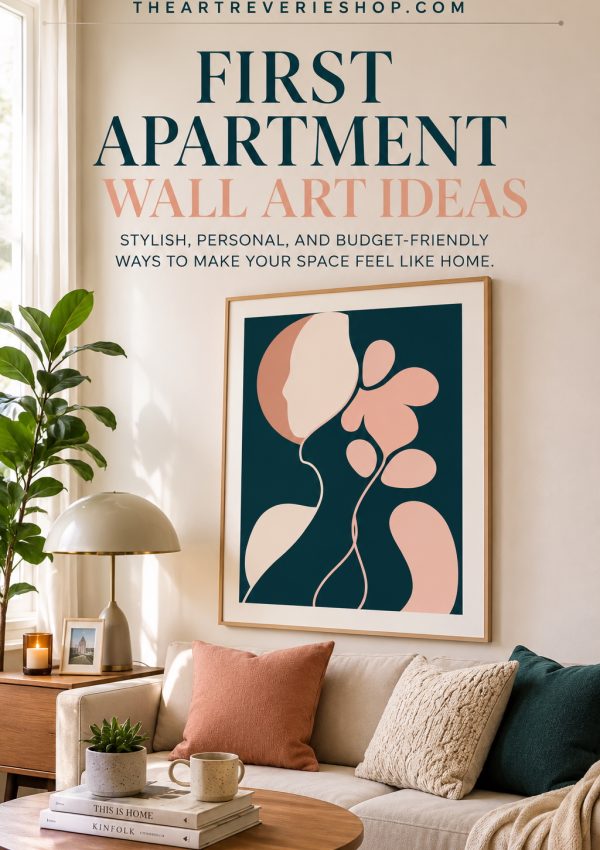
Light neutrals can make the wall feel less enclosed, although the room does not need to become entirely beige or white. A soft cream background with coral, green, ochre, blue, or terracotta details can add personality without appearing heavy.
Darker artwork works best when paired with light walls, a generous mat, or a slim frame.
Turn Overlooked Wall Sections Into Features
A small home office may not have one large uninterrupted wall. Instead, it might offer several awkward surfaces that are easy to ignore.
Useful locations include:
- Above a printer station
- Beside a bookcase
- Between two shelves
- Under a sloped ceiling
- Behind an office door
- Above a narrow filing cabinet
- Inside a converted closet office
Select artwork according to the shape of each available section. A small square print can complete the area above a printer, while a slim vertical design may suit the space beside a shelf.
Avoid placing art on every open surface. One or two deliberate placements will usually make the office feel more finished than numerous unrelated accents.
Try a Compact Gallery Grid
Gallery walls can work in small offices when the layout remains controlled. A simple grid of four matching frames creates structure without the irregular edges associated with larger mixed arrangements.
Choose prints with a shared palette, theme, frame finish, or illustration style. Keeping the same dimensions and spacing helps the entire group read as one installation rather than four separate objects.
Possible collections include vintage transportation, botanical studies, travel destinations, geometric designs, or illustrations connected to your profession and interests.
Please check out How to Create a Set of Matching Printable Art for guidance on coordinating color, subject matter, composition, and frames.
Use Mats to Reduce Visual Heaviness
A mat creates separation between the artwork and its frame. That border can make a colorful or detailed print appear calmer, which is especially useful in a small workspace.
White, cream, and pale neutral mats reflect more light than dark borders. They also give affordable printable artwork a more refined, gallery-inspired presentation.
Wide mats allow a smaller print to fit within a standard frame without requiring an oversized printing order. This approach can be economical while still producing meaningful visual impact.
For a more polished result, please read How to Make Printable Wall Art Look Expensive. The guide explains how paper, framing, mats, placement, and presentation influence the finished display.
Coordinate the Art With Visible Office Supplies
In a compact office, nearly every item contributes to the overall color scheme. Storage boxes, notebooks, desk lamps, cables, binders, and technology remain more noticeable because they occupy a greater percentage of the room.
Allow the artwork to connect with one or two existing colors rather than matching everything. A vintage print in warm yellow might pair well with a pencil cup, while a muted green could echo a storage box or a desk plant.
Limiting the use of repeated accent colors helps the office appear intentional. Too many unrelated shades can make a small workspace feel busier than it actually is.
Frame selection matters as well. Please check out How to Choose the Right Frame Color for Your Artwork before purchasing a finish.
Keep the Desk Wall Comfortable to View
Artwork displayed directly above a monitor should not become a constant visual distraction. Choose a composition that feels interesting during a break but quiet enough to remain in the background while you work.
Matte paper is particularly useful near windows, desk lamps, and computer screens because it produces less glare than a glossy surface. Reflective glazing can also become distracting when it catches changing daylight or overhead lighting.
Position the frame securely and leave enough clearance above monitors, lamps, and shelving. Lightweight frames may be practical in narrow work areas where bulky framing would feel intrusive.
This post contains affiliate links, which may support the site at no extra cost to you.
Create a Small Office That Feels Complete
The best wall art ideas for a small home office do more than decorate an empty wall. They improve the way the room is perceived.
Begin by identifying whether the office needs greater height, width, brightness, or visual calm. Select one strong focal point, use vertical and horizontal formats strategically, and preserve enough open wall space for the arrangement to breathe.
Thoughtful scale will always matter more than the number of prints. With printable artwork, carefully chosen frames, and deliberate placement, even the smallest workspace can feel distinctive, comfortable, and professionally styled.
Browse more printable vintage wall art and discover unique retro-inspired designs at THEARTREVERIESHOP.COM, where you’ll find downloadable artwork and timeless style for your home.
Discover more from The Art Reverie Shop
Subscribe to get the latest posts sent to your email.