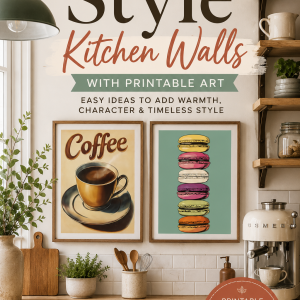
A home coffee bar can become much more than a convenient place to prepare a morning drink. With thoughtfully chosen vintage wall art, practical storage, and a few carefully layered accessories, even a small kitchen corner can feel like a charming neighborhood café.
The most successful coffee stations balance beauty with function. Mugs should remain easy to reach, supplies need sensible storage, and the artwork should strengthen the atmosphere without making the area feel cluttered.
Learning how to style a coffee bar with vintage wall art allows you to create a distinctive focal point using affordable printable artwork, collected objects, and pieces you may already own. Instead of copying a showroom display, you can design a coffee nook that feels nostalgic, useful, and personal.
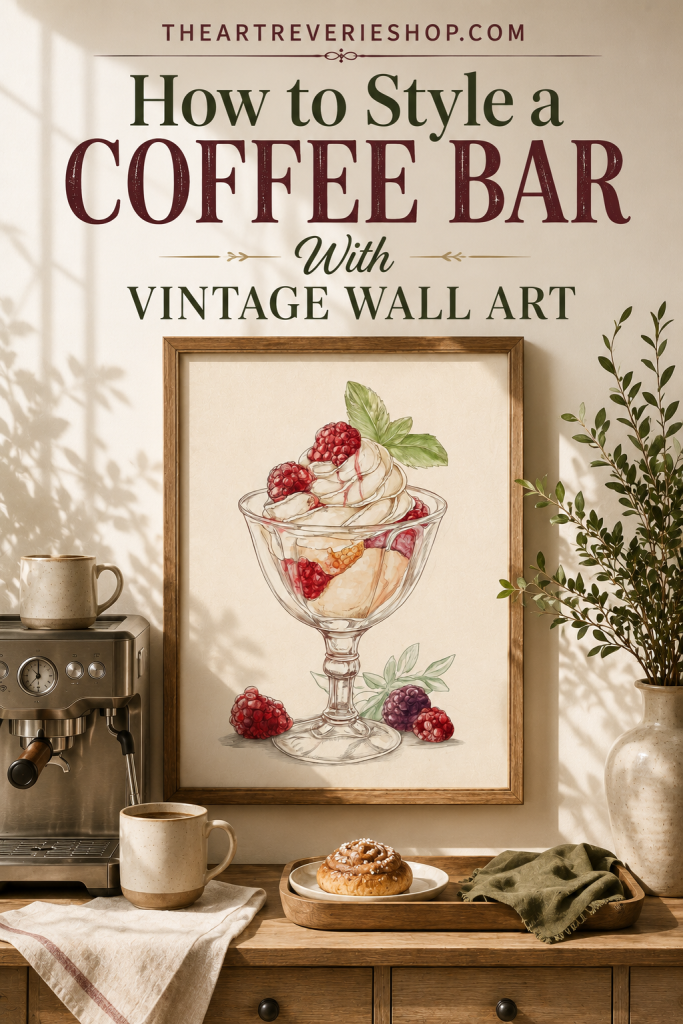
Choose a Vintage Coffee Bar Story
Begin by deciding what kind of vintage atmosphere you want the space to communicate. “Vintage” covers many decorating styles, so a clearer direction will make every later choice easier.
A 1950s diner-inspired station might feature cheerful typography, bright red accents, chrome details, and retro advertising art. By contrast, a European café theme could include faded travel posters, espresso illustrations, warm wood, cream ceramics, and antique brass.
Choose one central idea rather than combining every vintage style you enjoy. Your theme does not need to be rigid, but it should provide enough direction to keep the finished coffee bar visually connected.
Select One Anchor Print
Every well-styled coffee station benefits from a clear focal point. For most spaces, that focal point should be one larger vintage coffee print positioned above the machine, cabinet, or serving cart.
The anchor artwork establishes the color palette and personality of the entire arrangement. A bold retro coffee advertisement may introduce burnt orange, mustard yellow, cream, or deep brown. Meanwhile, an old café illustration could inspire softer shades of olive, burgundy, beige, and black.
Choose artwork that remains easy to recognize from several feet away. Highly detailed designs can lose their impact when printed too small, especially when surrounded by mugs, jars, appliances, and other practical items.
Before selecting your dimensions, please read the Printable Wall Art Size Guide for Choosing the Perfect Print so the artwork feels proportional to the available wall and furniture.
Match the Artwork to the Coffee Bar’s Width
Scale is one of the most important parts of styling a coffee bar with vintage wall art.
Artwork that is too narrow may appear disconnected from the cabinet beneath it. An oversized print, however, can make a compact station feel cramped. As a general visual guide, the complete wall display should occupy approximately two-thirds of the width of the furniture or counter below it.
For example, a 36-inch coffee cabinet might look balanced with a framed print measuring around 20 to 24 inches wide. Smaller carts and countertop stations may only need an 11 x 14-inch or 12 x 16-inch design.
Painter’s tape offers an easy way to test the proposed size. Outline the frame directly on the wall, step back, and examine the proportions before printing or purchasing supplies.
Create a Small Café-Style Gallery
One statement print is often enough for a narrow space, but a small gallery arrangement can make a wider coffee bar feel more collected.
Start with the main coffee-themed design, then add one or two supporting pieces. Suitable companions might include vintage typography, an illustrated coffee grinder, a European travel print, botanical artwork, or a small menu-inspired design.
Supporting artwork should contribute variety rather than repeat the same coffee cup in every frame. Shared colors, typography, or historical influences will make separate pieces feel connected.
Please check out How to Create a Set of Matching Printable Art for more ideas on coordinating several designs without making the arrangement look overly matched.
Leave approximately two to three inches between smaller frames. Consistent spacing helps the group read as one display rather than several unrelated decorations.
Use Frames That Strengthen the Vintage Mood
Frame selection changes how vintage coffee art feels within the room.
Natural wood works beautifully with farmhouse, rustic, and European café themes. Thin black frames bring structure to bold typography and mid-century designs. Antique gold or brass finishes can add character to elegant coffee illustrations, while warm white frames soften colorful prints in bright kitchens.
Avoid choosing a frame solely because it matches the cabinets. Instead, look for a finish that connects the artwork to nearby details such as shelf brackets, cabinet hardware, the coffee machine, or wooden serving pieces.
For a deeper explanation of coordinating finishes, please read How to Choose the Right Frame Color for Your Artwork.
Ready-made picture frames can be convenient when you are working with standard printable sizes. Check the listed display dimensions carefully because the outside measurement of a frame is usually larger than the artwork it holds.
Add a Mat for an Old Café Menu Effect
A mat can give an affordable printable design a more substantial, professionally presented appearance.
Cream, ivory, and warm white mats usually suit vintage coffee artwork better than stark white. These softer neutrals complement aged paper effects, brown typography, muted illustrations, and nostalgic color palettes.
Consider placing an 8 x 10-inch print inside an 11 x 14-inch frame or an 11 x 14-inch print inside a 16 x 20-inch frame. The extra border gives the artwork breathing room while helping a smaller file fill a more prominent wall area.
Please check out How to Add a Mat to Printable Wall Art before ordering a frame or mat, especially when the digital file and frame use different proportions.
Repeat Colors Below the Artwork
The wall art should feel connected to the working coffee station rather than floating above it.
Pull two or three colors from the anchor print and repeat them in small amounts. A mustard detail might reappear in a mug, while dark brown lettering could connect to a wooden tray. Cream backgrounds may coordinate with ceramic canisters, folded napkins, or a small vase.
Resist the temptation to match every item exactly. Slight variations create a collected appearance that feels more authentic than a perfectly coordinated store display.
A wooden serving tray can visually group sugar, syrups, spoons, and napkins. Keeping those smaller objects within one defined area also prevents the counter from appearing scattered.
Layer Practical Accessories Carefully
Beautiful styling should never interfere with preparing coffee.
Place frequently used items closest to the machine. Less essential decorations can sit toward the outer edges or on an upper shelf. Attractive storage pieces, including ceramic jars, glass canisters, and mug racks, allow functional objects to contribute to the design.
A small display shelf can create extra storage when counter space is limited. Display only a few carefully chosen pieces, such as two favorite mugs, a vintage-style tin, or a small plant.
Open shelving becomes visually crowded quickly. Leave some empty space around the objects so both the artwork and coffee supplies remain easy to appreciate.
Include One Authentic-Looking Vintage Detail
A convincing vintage coffee bar usually contains something that appears collected rather than newly purchased as part of a matching set.
Suitable details might include an old sugar bowl, a secondhand brass spoon, a small wooden grinder, an enamel sign, a retro thermos, or a stack of mismatched café cups. The item does not need to be genuinely antique. It simply needs enough character to keep the station from feeling generic.
Limit the display to one or two distinctive objects. Too many themed accessories can make the area resemble a stage set instead of a functional part of the kitchen.
Printable vintage artwork is especially helpful here because it establishes the nostalgic mood without consuming valuable counter space.
Adjust the Display for a Small Coffee Corner
Renters and homeowners with limited space can still create an attractive coffee station.
Use one vertical print rather than a wide gallery wall. A narrow framed design draws the eye upward and makes use of otherwise empty wall space. Wall-mounted mug hooks can also free the counter while turning attractive cups into part of the display.
Another option is to lean a small framed print against the backsplash. This approach avoids additional wall holes and makes seasonal changes easier. Keep the frame far enough from the sink, steam, and coffee splashes to protect the printed surface.
Should your chosen print need a more polished presentation, please check out How to Make Printable Wall Art Look Expensive.
Avoid Common Coffee Bar Styling Mistakes
Several small mistakes can weaken an otherwise attractive setup.
Hanging artwork too high creates an awkward gap between the wall display and the coffee station. Position the frame close enough to the cabinet or counter that both areas feel visually connected.
Excessive signs and word art may also compete for attention. One strong typographic print usually has more impact than five smaller signs repeating similar phrases.
Crowded countertops present another problem. Decorative items should not block electrical outlets, interfere with the machine, or make everyday cleaning difficult.
Finally, protect framed art from direct steam and moisture. Paper, ink, and inexpensive backing materials may warp when placed immediately above a kettle or beside a sink.
Build a Coffee Bar That Feels Collected
Knowing how to style a coffee bar with vintage wall art is less about filling every surface and more about creating a clear visual story.
Start with one memorable anchor print, select an appropriate scale, and repeat a few of its colors throughout the station. Frames, mats, trays, mugs, and storage pieces should support the artwork while keeping coffee preparation convenient.
A carefully designed coffee bar can bring warmth and personality to an overlooked kitchen wall, dining nook, or small apartment corner. Vintage printable artwork makes the transformation especially flexible because you can choose the size, frame, and presentation that work best for your home.
For help assembling the finished artwork neatly, please read How to Frame Printable Wall Art at Home for a Professional Look.
Browse more printable vintage wall art and discover unique retro-inspired designs at THEARTREVERIESHOP.COM, where you’ll find downloadable artwork and timeless style for your home.
Discover more from The Art Reverie Shop
Subscribe to get the latest posts sent to your email.